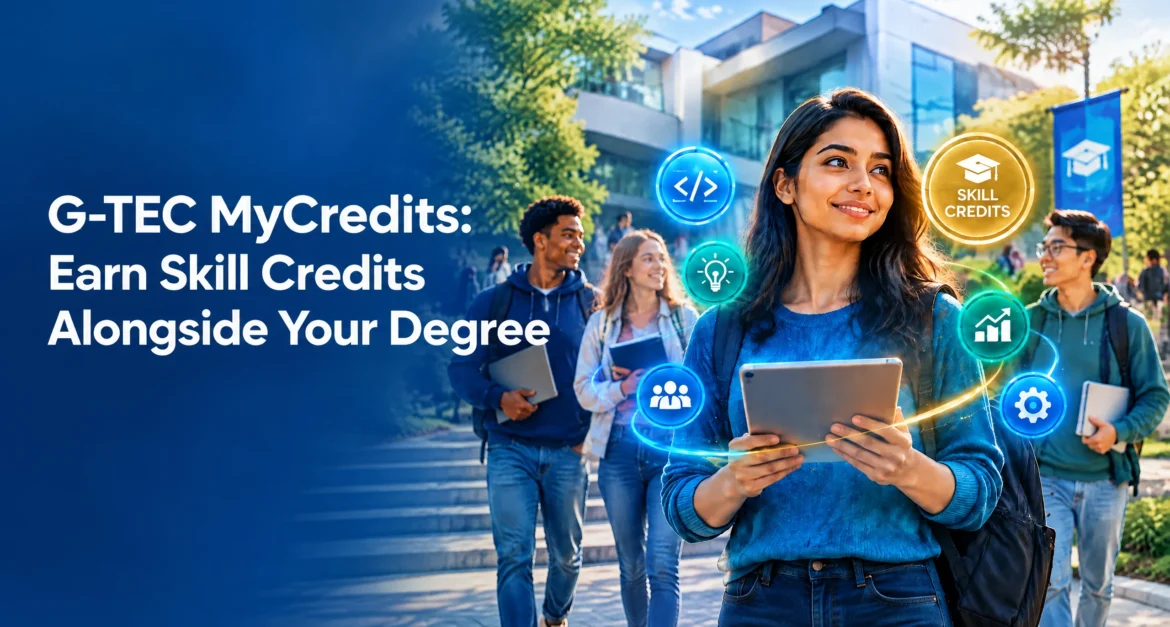
For today’s degree students, earning a university qualification is only the beginning of building a successful career. Employers increasingly look for practical knowledge, industry-relevant skills, and evidence that candidates can apply what they have learned in real-world situations.
This is where G-TEC Computer Education’s MyCredits initiative offers a meaningful advantage. Through industry-focused training programs, students can develop practical computer skills while potentially earning recognized academic credits, helping them build both their qualifications and career readiness at the same time.
For students searching for the best computer education institute in Kochi, G-TEC offers an opportunity to connect academic learning with practical industry skills.
Why Practical Skills Matter Alongside a Degree
Many graduates complete their degree with a strong understanding of theoretical concepts but limited exposure to professional software and workplace technologies. However, today’s job market demands more than academic qualifications alone.
Skills in areas such as:
- SAP ERP
- Tally and Accounting Software
- Data Analytics
- Power BI
- Python Programming
- Digital Marketing
- Full-Stack Development
- Cloud Computing
can significantly improve a student’s employability.
A commerce graduate, for example, may understand accounting principles but struggle to use enterprise accounting software. Similarly, a computer science student may know programming concepts but lack experience working on practical projects.
Industry-oriented education helps bridge this gap.
G-TEC Computer Education focuses on providing hands-on learning opportunities that allow students to develop confidence in using modern technologies and workplace tools.
What Is G-TEC MyCredits?
MyCredits is an initiative designed to connect skill-based education with the evolving academic credit framework under India’s National Education Policy (NEP) 2020.
The concept encourages students to gain practical skills through structured training programs while building a record of their educational achievements.
Through eligible credit-based programs, students can pursue industry-relevant courses in addition to their regular degree studies. This approach supports the idea of multidisciplinary learning, where students are encouraged to develop knowledge beyond their primary academic specialization.
For a student, this means their education does not have to remain limited to textbooks and examinations. Practical learning can become an important part of their overall academic and professional journey.
How Skill Credits Can Benefit Degree Students
One of the biggest advantages of credit-based skill education is the opportunity to combine academic learning with practical expertise.
Students from different streams can choose programs based on their career interests and future goals.
For example:
Degree Stream | Recommended Skill Areas |
B.Com / BBA | Accounting, SAP FICO, Power BI, Data Analytics |
BCA / B.Sc Computer Science | Python, Full-Stack Development, Cloud Computing |
B.Tech | Advanced Software, Data Science, Cyber Security |
BA / Other Degree Programs | Digital Marketing, Design, Media, Office Automation |
This flexibility allows students to explore career opportunities outside their traditional academic subjects.
A B.Com student interested in technology can learn Data Analytics. A BCA student interested in business can explore SAP or Digital Marketing. This combination of domain knowledge and technical skills can create a stronger professional profile.
The MyCredits Learning Journey
The process of earning skill credits through structured training is designed to be simple and student-friendly.
1. Career Counseling
Students first identify their interests, academic background, and career goals. Professional guidance helps them select a suitable course instead of choosing a program without understanding its relevance.
2. Practical Training
The learning process focuses on practical exposure rather than theory alone. Students work with industry-relevant software, tools, and projects under the guidance of experienced trainers.
3. Skill Assessment
Students undergo assessments to evaluate their understanding and practical competency. This ensures that learning outcomes are measured properly.
4. Credit Recognition
Eligible completed programs can contribute toward recognized skill-based academic credits under the applicable framework and awarding processes.
5. Digital Certification
Students receive documented proof of their learning achievements, which can be useful when applying for internships, jobs, or further education.
Why Choose the Best Computer Education Institute for Skill Development?
G-TEC Ernakulam South Computer Education has built its training approach around the changing needs of students and employers.
Rather than focusing only on completing a syllabus, the institute emphasizes practical learning and career preparation.
Some key advantages include:
- Industry-relevant computer courses
- Practical lab-based training
- Experienced faculty and trainers
- Career-focused course selection
- Hands-on project experience
- Programs suitable for students from multiple academic backgrounds
- Opportunities to develop additional professional skills alongside a degree
For students looking for the best computer education institute in Kochi, these factors can make a significant difference when choosing where to begin their skill development journey.
Courses Available for Different Career Goals
G-TEC offers a wide range of programs designed to meet the needs of today’s students and professionals.
Accounting and Finance
Students interested in finance and business operations can explore:
- TallyPrime
- GST and Taxation
- SAP FICO
- SAP MM
- Advanced Accounting
These courses are particularly useful for commerce students who want to improve their employability in accounting and finance roles.
Data Analytics and Artificial Intelligence
Data-driven decision-making has become important across almost every industry. Programs in Data Analytics, Power BI, Python, and Artificial Intelligence can help students understand how businesses use data to solve problems and make informed decisions.
Software Development
Students interested in technology careers can explore:
- Python Programming
- Full-Stack Development
- Web Development
- Mobile App Development
- Software Testing
These programs provide opportunities to build practical projects and develop programming skills.
Cloud Computing and Cyber Security
With businesses increasingly relying on digital infrastructure, cloud technology and cyber security have become growing career fields. Students can develop foundational knowledge in cloud platforms, networking, and security concepts.
Digital Marketing and Creative Technologies
For students interested in media, communication, and creative industries, courses in Digital Marketing, Graphic Design, Animation, and related technologies can open up alternative career pathways.
How Skill-Based Learning Helps Students Stand Out
Imagine two graduates applying for the same entry-level position.
Both have similar academic qualifications. However, one candidate has also completed practical training in Power BI, created a portfolio project, and gained experience using industry software.
The second candidate may have a stronger opportunity to demonstrate their readiness for the workplace.
This is the real value of skill development.
A professional certification alone cannot guarantee a job, but practical knowledge, confidence, and demonstrable abilities can make a candidate more competitive.
Students who begin developing these skills early during their degree may also have more time to build portfolios, complete internships, and prepare for interviews before graduation.
Supporting NEP 2020’s Vision for Multidisciplinary Education
India’s National Education Policy encourages flexible and multidisciplinary learning opportunities for students.
The modern education system increasingly recognizes that students should not be restricted to a single area of study. Combining academic knowledge with vocational and industry-oriented skills can help create more adaptable graduates.
Initiatives such as MyCredits reflect this broader direction by encouraging students to value both theoretical education and practical competency.
However, students should always verify the specific credit recognition, awarding institution, and university acceptance requirements applicable to their program before enrollment.A degree provides an important academic foundation, but practical skills can help students move closer to their career goals.
G-TEC Computer Education’s MyCredits initiative offers students an opportunity to explore industry-focused learning alongside their regular education. By gaining exposure to professional software, technology, and practical projects, students can prepare themselves for a changing employment landscape.
Whether you are studying commerce, computer science, engineering, business, or another degree program, developing additional industry-relevant skills can be a valuable investment in your future.
If you are searching for the best computer education institute in Kochi to begin your skill development journey, G-TEC Ernakulam South Computer Education offers a range of career-focused programs designed to help students learn, grow, and prepare for the workplace.
A regular certificate generally confirms course completion. Credit-based education may involve a structured framework where eligible learning achievements are recognized within an academic credit system. Students should check the specific accreditation and awarding details of each program.
Yes. Commerce students can explore areas such as Data Analytics, Power BI, SAP, and Digital Marketing to expand their career options.
Yes. Many computer education programs are designed for students from different academic backgrounds. The right course depends on the student’s interests, existing knowledge, and career goals.
Absolutely. Practical exposure helps students understand how theoretical concepts are applied in real workplace environments.